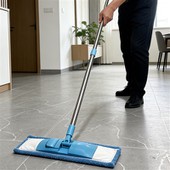
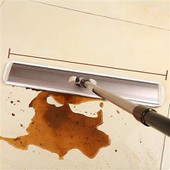
A cloth-clamping mop mainly consists of two parts: A telescopic rod and a mop head. Some models have a more refined telescopic rod design, while the mop head serves to secure and replace the mop head.
Telescopic Rod: The telescopic rod of some cloth-clamping mops is composed of multiple tubes, such as the common No. 1, No. 2, and No. 3 tubes. These tubes are usually not directional, making installation simple. The tubes are directly inserted into the corresponding positions on the mop head, and then tightened counterclockwise. This method assembles and secures the telescopic rod. This design allows the mop length to be adjusted according to actual usage needs, making it convenient for people of different heights and adapting to different cleaning height requirements. For example, when cleaning the top of high cabinets or the bottom of low sofas, adjusting the telescopic rod length can achieve better cleaning results.
Mop Head: The mop head is the key component of a cloth-clamping mop, and its unique design secures the mop head. Common types of clip-on mops include slots and buckles. A slot is like a specific groove into which the mop head inserts and is secured by a tight fit with the mop head. Buckles, on the other hand, use a fastener-like component to firmly hold the mop head in place. Some models of clip-on mops use a press-to-hold mechanism, making installation more convenient; a simple press is all it takes to attach the mop head. Furthermore, the mop head is detachable, which not only facilitates cleaning after use, keeping the mop head clean and extending its lifespan, but also allows for easy replacement when the mop head is damaged or needs to be changed to a different material. In addition, clip-on mops are highly versatile; besides the included mop head, other cloths can be used as replacements, meeting the diverse cleaning tool needs of different users.